
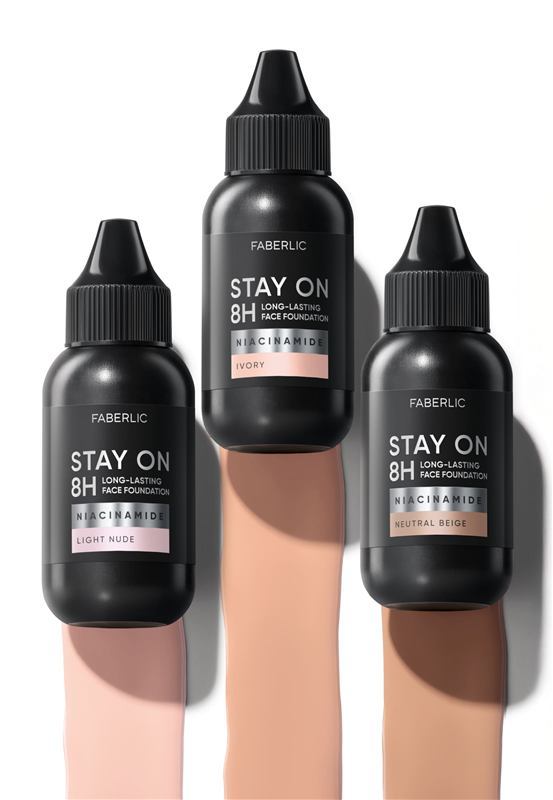
Long-wear matte foundations last the longest and are the least forgiving. Both properties come from the same thing: they set firmly and then do not move.
What that means in practice
Once it sets, it stays. Excellent for a twelve-hour day, and it means you have a short window to blend before it fixes in place.
Work in sections. Half the face at a time, blending each before moving on. Applying to the whole face and then blending is how people end up with patches.
It will not shift for touch-ups. Adding more over a set layer looks thick rather than corrected.
Preparation matters more than with any other base
A matte long-wear formula clings to texture, so what is underneath decides the result:
- Moisturiser, fully absorbed. Applying base onto fresh moisturiser makes it slide
- Wait a few minutes. This is the step people skip
- Skip heavy oils underneath, which break down long-wear formulas
- Exfoliate the night before if your skin flakes, never the same morning
Who it suits
- Oily and combination skin, which the formula is built for
- Long days, events, warm weather, photographs
- Anyone who does not want to think about their base after 8am
Who should look elsewhere
- Dry or flaking skin. Matte formulas emphasise every dry patch, and this is the base most likely to look worse at hour six on dry skin
- Mature skin, where matte finishes settle into fine lines
- Anyone wanting a natural, skin-like finish — that is a different category
Applying it
Small amount in the centre of the face, blend outward, work in sections. A damp sponge gives a lighter finish than a brush. Set only the T-zone, lightly — powder over a matte base is what makes skin look thick.
Blend past the jawline and check in daylight.
Removal
Long-wear formulas need a proper first step — a cleansing oil, balm or milk on dry skin — before your usual cleanser. A gel alone will not shift it, and scrubbing at it is worse for your skin than the makeup was.
The full shade range is in the Faberlic catalogue. For shade matching, see the foundation guide.