



Oven cleaners are typically the most aggressive product in a household, because baked-on carbonised grease is the hardest thing in a kitchen to remove.
Treat it accordingly.
Safety, properly
Ventilate. Open a window and keep the room aired throughout, not just at the start.
Gloves, always. Oven cleaners are hard on skin, and repeated exposure causes dermatitis.
Protect your eyes. Spraying upward into an oven cavity means product can come back down. Do not lean in.
Never mix with anything else. No other product, before, during or after, until everything is rinsed. This applies to every cleaning product and matters most with the strong ones.
Keep children and pets out of the room while it works.
Cold oven. Never apply to a warm surface — it increases fumes and can damage the enamel.
Getting results without scrubbing
Contact time does the work. This is the whole technique:
- Remove shelves and loose debris
- Apply evenly to the cold interior, avoiding heating elements, fans and the door seal unless the label says otherwise
- Leave it for the stated time. This is where the cleaning happens
- Wipe out with a damp cloth, rinsing the cloth often
- Rinse thoroughly — several passes with clean water. Residue burns and smells at the next use
- Leave the door open to air before cooking
If it is not shifting, leave it longer rather than scrubbing harder.
Surfaces to avoid
Aluminium, some self-cleaning oven linings, and painted exteriors can be damaged. Check your oven's manual — self-cleaning coatings in particular are ruined by chemical cleaners, and that is an expensive mistake.
Storage
Original container, labelled, out of reach of children. Never decant into another bottle.
Prevention
A tray or liner under anything that spits, and wiping spills while the oven is still warm, prevents most build-up.
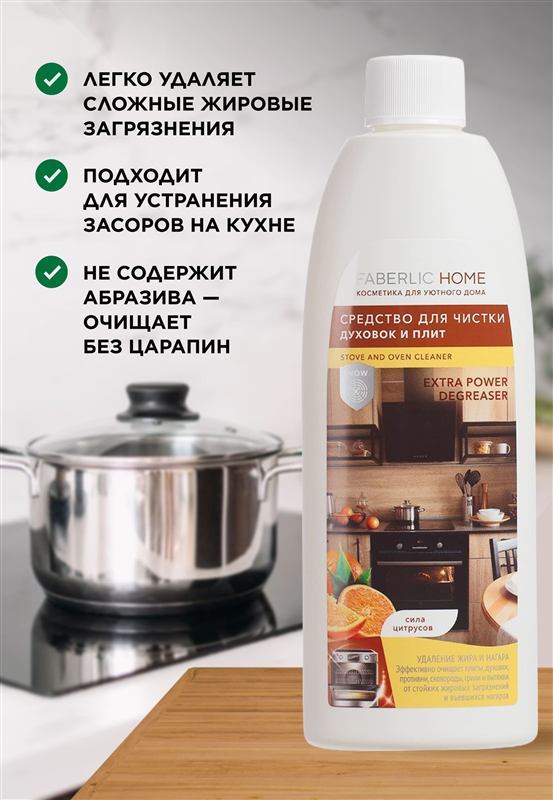
The full instructions are in the Faberlic catalogue and on the label. For the range, see the home care guide.