


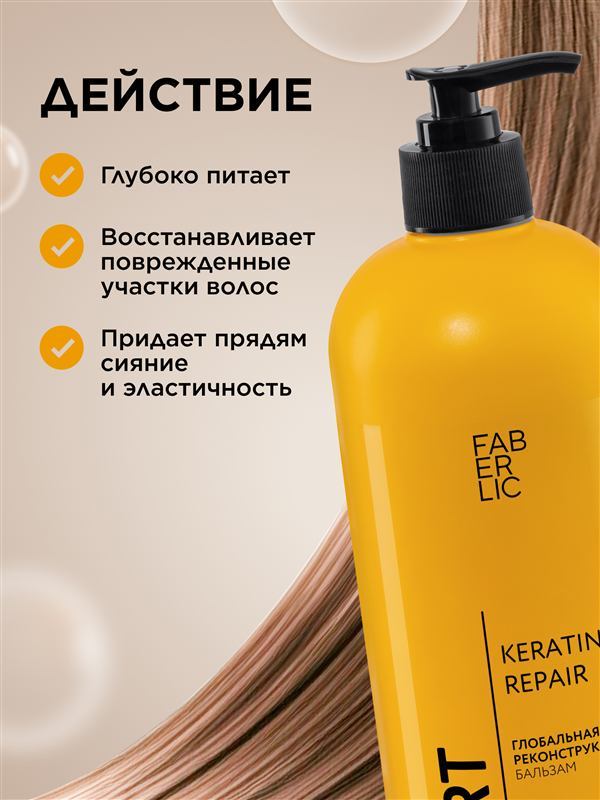
This balm belongs to the Expert Hair series, alongside a shampoo and mask of the same name. Which raises a question people ask often: does using a matching set matter?
Do sets matter?
Convenient, not necessary.
Products within a series are formulated to work together and to smell consistent, which is genuinely pleasant. But there is no technical requirement, and mixing is frequently the better choice.
The most common sensible mix: a clarifying or volume shampoo with a richer conditioner. Many people need thorough cleansing at the scalp and substantial conditioning on the ends — a matched set optimised for one of those cannot do both.
Match to what each part of your hair needs, not to what is on the box.
When a set does make sense
- The whole length of your hair has the same requirement
- You want the routine simple and unambiguous
- The series is built around a specific need — repair, colour care — that you have throughout
Where a balm does its work
The lengths and ends, never the roots. The roots are the newest, healthiest hair and need nothing; conditioner there makes hair greasy a day sooner and flattens it.
For damaged hair, the conditioner does more visible work than the shampoo. If you were going to spend more on one, spend it here.
Using it
- Squeeze water out of your hair first. Applying to soaking hair dilutes it until it slides off — this wastes more product than any other error
- Mid-length to ends
- Comb through with a wide-toothed comb while it is in. This distributes it and is the safest moment to detangle
- Leave it the stated time. Thirty seconds of a two-minute product is a waste
- Rinse thoroughly. Residue is what makes hair feel heavy after conditioning
Balm, mask, or both?
A mask is the weekly version, used instead of the balm rather than in addition. Both in one wash leaves residue and produces limp, over-conditioned hair.
The full composition is in the Faberlic catalogue. For the distinction, see the haircare section.