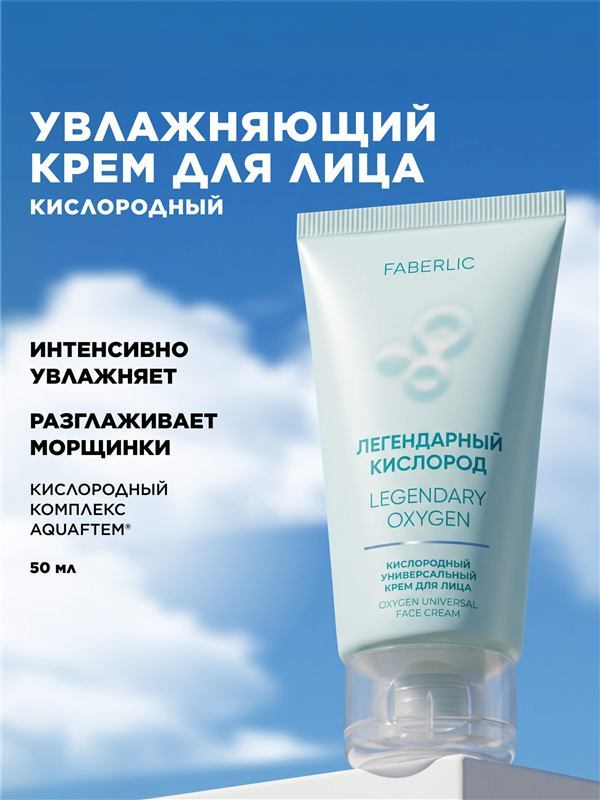




If Faberlic is known for one thing, it is oxygen cosmetics. The company was founded in 1997 around its Aquaftem complex, and this universal cream is the most direct expression of that positioning - the product most people mean when they say they want to try the oxygen line.
What "oxygen cosmetics" refers to
It is the brand's own technology and the basis of its identity, developed to carry oxygen within a skincare formula. Faberlic has built its catalogue around it for more than two decades, and the oxygen series remains the largest direction in its face care.
For a full technical description of the complex and the composition of this particular cream, the Faberlic catalogue is the authoritative source - it is the brand's own account rather than a second-hand summary.
Who a universal cream suits
"Universal" means it is formulated for use across skin types and at any time of day, rather than being split into a day and a night version. That makes it a sensible first purchase:
- If you are trying the brand for the first time and do not want to commit to a full routine
- If you prefer one product to a day-and-night pair
- If your skin is normal or combination and has no specific concern to target
- For travel, where a single jar replaces two
Skin with a defined problem - persistent dryness, marked signs of ageing, acne - is usually better served by a cream aimed at that concern.
Using it
- Apply to clean skin, morning and evening, on the face and neck
- A small amount is enough; face cream is routinely over-applied
- Press it in with the fingertips rather than dragging across the skin
- Give any new cream three to four weeks before deciding - that is roughly one skin renewal cycle
- Follow with sunscreen in the morning. No moisturiser substitutes for sun protection, which does more for how skin ages than any cream
If skin reacts - redness, itching, small bumps - stop and let it settle. Persistent problems belong with a dermatologist rather than a change of cream.
The full composition and the rest of the oxygen line are listed in the catalogue, which is reissued about every three weeks.