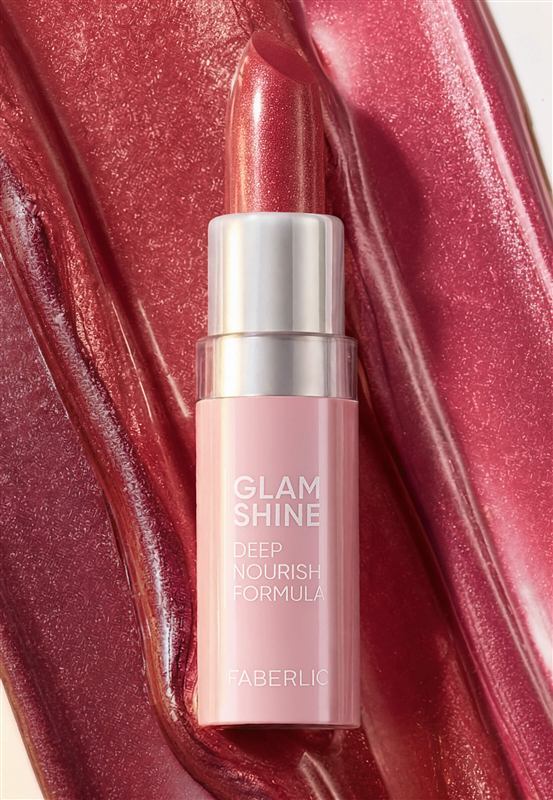
Glossy finishes are the most flattering and the shortest-lived. Both facts come from the same property: the formula stays fluid rather than setting.
The wear trade-off
A matte formula sets into a film and stays. A glossy one remains mobile, which means:
- It transfers — onto cups, cutlery, other people
- It needs reapplying, typically after eating or every few hours
- It moves on the lip, which is why it feels comfortable
None of that is a fault. It is the mechanism that produces the shine and the comfort, and expecting eight-hour wear from a glossy lipstick is expecting it to be something else.
Where gloss flatters
Dry or textured lips — shine reflects light off the surface rather than sinking into lines, so glossy finishes are far kinder than matte on lips that are not perfectly smooth.
Thin lips — light reflecting off the centre reads as fullness. Concentrating the shine in the middle of the lower lip is the standard trick.
Mature lips, where matte formulas emphasise fine lines.
Daytime and casual wear, where the softness suits.
Where it works less well
- Long events, where reapplication is impractical
- Windy days — anything sticky catches hair
- Photographs with flash, where gloss can look wet rather than glossy
- Alongside strong eye makeup. Pick one feature
Applying it
- Balm first if your lips are dry, blotted before colour
- From the tube for full colour, or with a fingertip for a sheerer wash
- Concentrate the centre of the lower lip if you want the fullness effect
- A lip pencil stops it travelling into fine lines, which glossy formulas do more than matte ones
Making it last a little longer
Blot after the first layer, then reapply. It will still need topping up — the aim is stretching two hours to three, not competing with a matte.
The current shade range is in the Faberlic catalogue. For choosing a finish, see the lipstick guide.